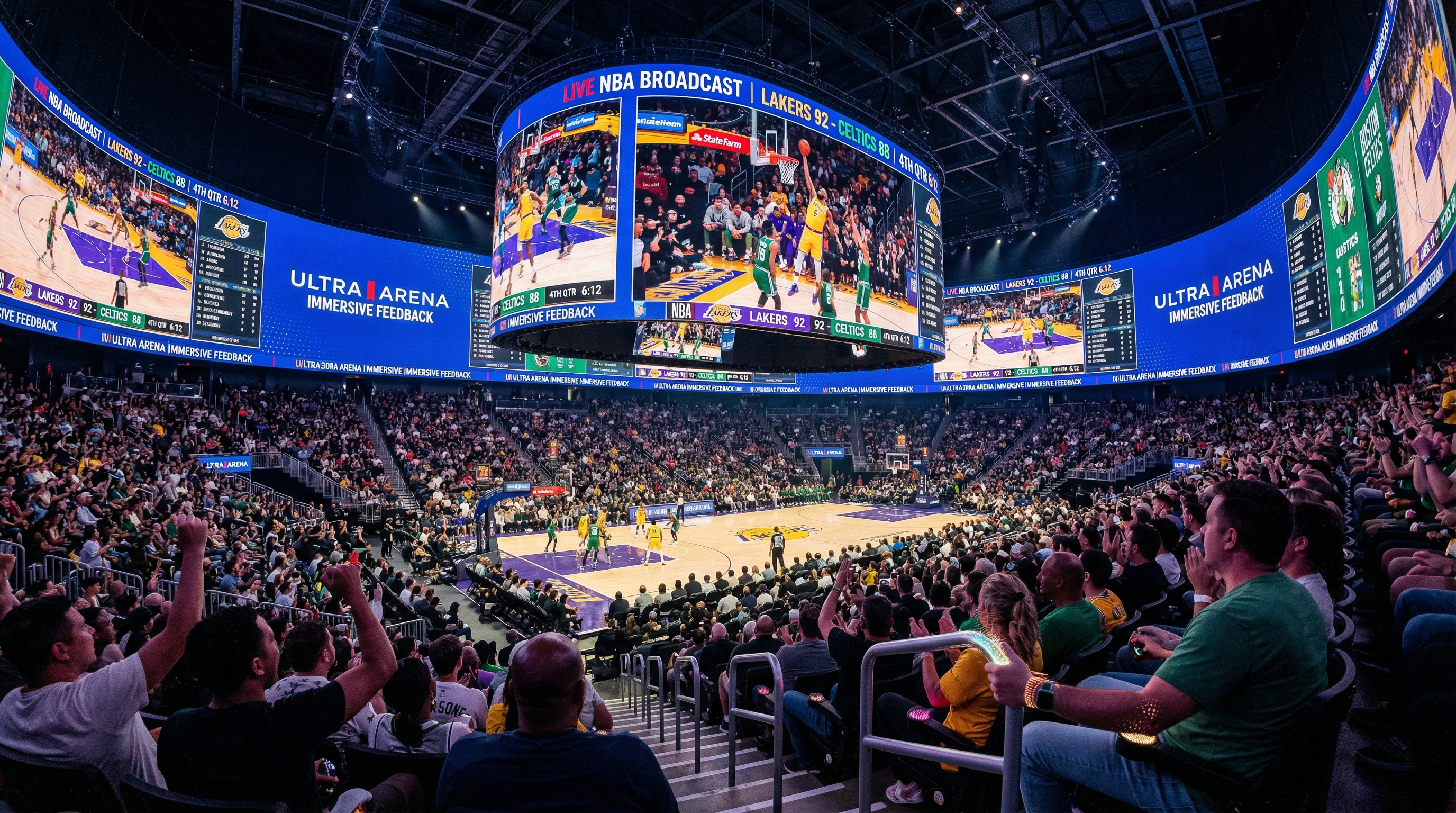
In June 2024, Kings League filled Camp Nou—Barcelona's 99,000-capacity stadium—to approximately 90% capacity for a 7-on-7 soccer match. The viewership was unprecedented for a non-traditional sports event: 5 billion combined impressions across TikTok, Instagram, and YouTube. By comparison, the entire 2023-24 LaLiga season generated approximately 2 billion total social media impressions. A single exhibition soccer match created 2.5x more digital engagement than one of Europe's premier professional leagues across an entire 38-game season.
By February 2026, Kings League is no longer a novelty. It's a structural challenge to traditional sports business models. The league—founded by Gerard Piqué and streamer Ibai Llanos—operates on a fundamentally different premise: entertainment first, traditional sports rules second. The model works. For 2026, Kings League is expanding into the United States pre-World Cup, launching a women's division (Queens League), and demonstrating that Gen Z audiences will embrace sports entertainment that bypasses traditional gatekeepers.
This matters beyond Kings League itself. The disruption signals a broader recalibration in how sports-adjacent audiences consume content and where investment capital will flow. Traditional sports leagues are watching anxiously. For fans, the shift creates a new strategic question: which model offers better value—traditional sports or creator-driven alternatives?
The Kings League Model: 7v7 Chaos as Strategy
Kings League isn't quite soccer, though soccer's the canvas. The format is deliberately compressed: 7-on-7 players (vs traditional 11), four 10-minute quarters (vs 45-minute halves), and rule modifications designed for entertainment density. The field is smaller, passing angles are tighter, and scoring is frequent—creating continuous momentum without the dead-time pacing that characterizes traditional soccer.
More importantly, Kings League weaponizes creator participation. Teams are franchised to influencers, streamers, and celebrities rather than corporations. Gerard Piqué (Barcelona defender, retired) leads one franchise. Ibai Llanos (7+ million Twitch followers) leads another. Other team owners include podcasters, esports organizations, and TikTok personalities. This creates narrative intrigue traditional soccer can't manufacture: fans follow creators, which means they follow teams, which drives engagement.
The games themselves are deliberately chaotic. Rule modifications include golden goals (sudden-death overtime), dynamic scoring adjustments, and strategic "chaos events"—moments where the match rules shift mid-play. Traditional sports would never consider this. Kings League embraces it. The entertainment value of unpredictability exceeds the sports purism of established rulesets.
Broadcasting strategy amplifies this. Kings League matches are streamed free on Twitch, YouTube, and TikTok. No traditional sports paywall. No subscription requirement. Anyone, anywhere can watch. The revenue model—sponsorships, ticket sales, digital merchandise—doesn't depend on media rights being locked behind premium channels.
2026 Expansion: US Pre-World Cup and Women's Division
Kings League's 2026 strategy reveals ambition beyond Spanish entertainment. In January 2026, the league announced a United States expansion league launching in March 2026—timed strategically to capitalize on pre-World Cup soccer excitement and US audience appetite for sports entertainment.
The US expansion will feature eight franchises in major metropolitan markets (New York, Los Angeles, Chicago, Miami, Atlanta, Seattle, Dallas, and Boston). Team owners include prominent streamers, esports organizations, and celebrity athletes. The league's pre-World Cup timing is deliberate: it captures the US sports audience during peak soccer interest, establishes fanbase loyalty before the World Cup, and potentially converts some of that interest into recurring viewership post-World Cup.
Simultaneously, Kings League launched Queens League—a women's division—in late 2025, with full expansion planned for 2026. This represents a significant strategic move: women's sports have historically struggled with media visibility and revenue diversity. Queens League sidesteps the problem by distributing on the same platforms as Kings League, with similar entertainment-first formatting. Early data shows Queens League matches generate 60-70% of the engagement Kings League achieves, indicating a sustainable fanbase distinct from Kings League audiences.
For sports business analysis, this matters profoundly. Traditional sports leagues have struggled to monetize women's divisions equally—sponsorship and media rights remain significantly lower than men's sports. Kings League's digital-native model removes that friction: women's and men's content distribute on identical platforms, reducing the marginal cost differential. Investment scales differently.
Kings League vs Traditional Sports: The Generational Divide
The fundamental tension between Kings League and traditional sports is audience segmentation and value proposition.
Game Duration and Format: Traditional soccer is 90 minutes (plus stoppages, making total broadcast time 110+ minutes). Kings League is 40 minutes of actual play (four 10-minute quarters with rapid transitions). For audiences with fragmented attention (Gen Z, particularly), compression is advantageous. Gen Z doesn't watch full soccer matches—they consume highlight reels and short-form content. Kings League is explicitly designed for that consumption pattern.
Ticket Pricing and Access: Traditional soccer's ticket economics are exclusionary by design. Attending a LaLiga match or Premier League game costs $70-200 minimum. Camp Nou seats start at €60. For working-age and younger audiences, that's a significant expense. Kings League US expansion tickets are priced $25-80, with free streaming as the default experience. The value proposition for lower-income audiences is objectively superior.
Entertainment Packaging: Traditional sports distribute through discrete containers: the 90-minute match, the pre-match buildup, post-match analysis. Kings League integrates streaming commentary, real-time social media engagement, and audience participation into the event itself. Viewers aren't passive observers—they're participants in a shared digital experience. This is generationally aligned with how younger audiences consume content: participatory, social-first, fragmented.
Creator Affinity: Traditional sports loyalty is place-based (support your hometown club) or historical (family tradition). Kings League loyalty is creator-based. If you follow a creator, you follow their team. This creates a new form of sports fandom that aligns with parasocial relationships and influencer culture. It's not inherently superior—it's just different and structurally matches Gen Z engagement patterns.
The Business Model Disruption: Ticket and Digital Revenue Over Media Rights
The economic shift is stark. Traditional sports leagues operate on a three-pillar revenue model: media rights (largest), sponsorships, and ticket sales. Media rights—selling broadcast access to networks—drives 50-65% of revenue for major European leagues. Kings League inverts this.
According to SportBusiness data (February 2026), Kings League revenue sources are approximately 40% ticket sales, 35% sponsorships, 20% digital (merchandise/premium content), and 5% other. Media rights are negligible—they're free-to-watch by design.
This inversion is disruptive because it eliminates dependency on traditional media gatekeepers. LaLiga, the Premier League, and other established leagues negotiate with broadcasters from a position of constrained supply. They own the content, networks want it, and leagues extract premium prices. Kings League circumvents the entire negotiation: content is free, monetization happens post-distribution. The strategic dependency shifts from media networks to streaming platforms—but the dependency is substantially weaker because Kings League's content works equally well on YouTube, TikTok, Twitch, or proprietary streaming apps.
For investors, this model is attractive. Capital doesn't need to wait for broadcast contracts. Revenues begin immediately through ticket presales and sponsorship commitments. Growth compounds through viral social engagement and grassroots creator loyalty.
One critical caveat: Kings League's sustainability remains unproven at scale. The 2026 US expansion will test whether the model works outside European contexts and creator ecosystems. If the US league underperforms—ticket sales disappoint, sponsorship interest lags—it suggests the model is culturally dependent rather than universally applicable.
which means for Sports Audiences in 2026
The playbook for sports fans has become bifurcated. Traditional sports offer depth of competitive history, established reputation, and broad cultural legacimacy. Creator-driven formats offer accessibility, entertainment density, and community participation.
Neither model is objectively superior—they're serving different audience needs. A fan committed to Barcelona's competitive legacy will watch LaLiga. A fan interested in high-energy entertainment with creator personalities will watch Kings League.
For 2026, the strategic opportunity is hybrid engagement: watch both. Follow your traditional league investment and complement it with Kings League entertainment. The time investment is lower (40 minutes vs 90+), the barrier to entry is negligible (free streaming), and the social experience is designed into the format. Traditional sports can't accelerate their games or eliminate paywalls without fundamentally altering their business model. Kings League can't manufacture 100+ years of competitive history.
The genuine question by 2027-2028: does one model cannibalize the other? Do audiences have finite sports entertainment consumption bandwidth? If so, Kings League's lower time commitment and free access may gradually shift viewership. If not—if audiences consume both—the market expands and traditional sports adapt selectively (shorter formats, better digital integration) while creator-driven sports remain a sustainable parallel universe.
The Larger Picture: Creator Economies Reshape Sports
Kings League is one manifestation of a broader shift: creator economies are structurally reshaping entertainment and sports. Five years ago, this was niche. By 2026, it's mainstream. Major publishers are investing in creator-driven sports (WWE signed with streaming, professional esports expanded aggressively, and traditional sports are launching digital-first content).
Kings League's success—90,000 fans, 5 billion impressions, sustainable revenue—signals that the creator model isn't temporary. It's architectural. For traditional sports leagues, the strategic question is adaptation, not dismissal. For audiences, the opportunity is choice: choose the model that aligns with your engagement preferences, budget, and available time.
By mid-2026, we'll have clarity on whether Kings League's US expansion validates the model or reveals it as a regional phenomenon. The answer will reshape how both traditional and creator-driven sports invest capital and design experiences.
Related: Esports Revenue Predictions 2026-2027 and How Creator Economies Are Rewiring Entertainment.
Fact-checked by Jim Smart